
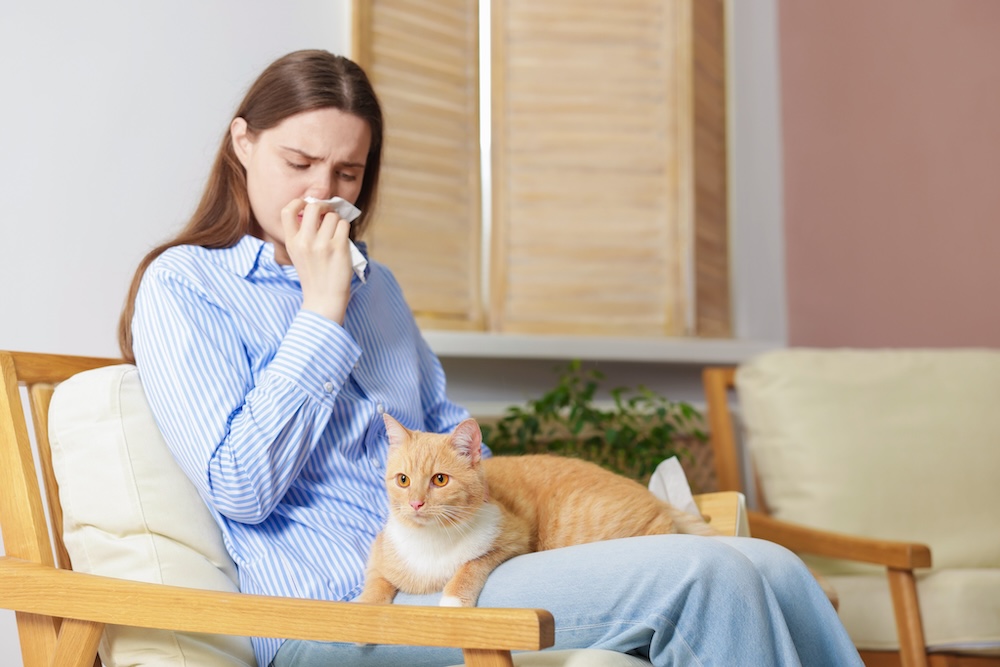
If you find yourself sneezing, coughing, or rubbing itchy eyes after spending time around your pet, you could be dealing with an allergy. Even if you haven’t been in direct contact with an animal, pet dander in your home or on clothing could mean you need pet allergy treatment sooner than you think. But can adults with no prior history actually develop a pet allergy later in life? Here’s what Atlanta adults need to know.
Is It Possible to Develop a Pet Allergy as an Adult?
Many adults experience symptoms from allergies to cats, dogs, birds, rabbits, hamsters and other household pets. When these symptoms appear it’s important to visit an allergist, regardless of your age.
Pet Allergies Can Develop at Any Age
Adults of any age can develop a pet allergy, with symptoms ranging from mild to severe. And a person could have been exposed to pet dander many times without issue before they experience a reaction. It’s also possible to react to a pet you’ve had for years. As the immune system can change over time, a lack of previous response to a pet doesn’t guarantee lifelong tolerance.
Why Pet Allergies May Appear in Adulthood
Stress, hormonal and gut health changes, lifestyle choices and repeated exposure to allergens are among the key factors driving changes in the immune system. In some cases a person may have had limited exposure to pets as a child, and find that prolonged exposure as an adult has started to trigger symptoms.
Common Signs of Adult-Onset Pet Allergies
To identify whether you may have developed a pet allergy as an adult, pay attention to your symptoms after possible exposure to pet dander. Common signs of pet allergies include sneezing, a runny or congested nose, itchy eyes, hives, coughing, wheezing and shortness of breath.
What Causes Reactions to Pets
In most cases the reaction is triggered by proteins found in an animal’s dander, saliva or urine, rather than the fur itself. Adults with allergies are often exposed to allergens through airborne particles, direct contact, or dander in carpets or fabrics. Repeated exposure to allergens can gradually increase sensitivity.
What to Do and When to See an Allergist
Experiencing pet allergy symptoms as an adult can be confusing, particularly when you’ve previously been around animals without a problem. For some people the allergy may have developed at a later time, while others could be reacting to a different substance such as mold or dust mites. Allergists offer allergy testing services to diagnose the condition and help determine the best treatment approach, whether that’s limiting exposure, using medication, or implementing immunotherapy.
Professional Pet Allergy Treatment in the Atlanta Area
Chacko Allergy, Asthma and Sinus Center helps patients find relief from seasonal, environmental, food and pet allergies. Visit one of our Atlanta-area allergy centers for expert pet allergy testing and treatment. Give us a call at (678) 668-4688 or request an appointment today.


